


Tax Credit vs. Tax Deduction — and Can an S Corporation Actually Reduce Self-Employment Tax?


Business owners often use "credit" and "deduction" interchangeably, but they work in fundamentally different ways — and understanding the difference changes how you evaluate every tax planning opportunity that comes up, including whether an S corporation is actually worth considering for self-employment tax purposes. This guide draws a clear line in the tax credit vs deduction comparison, then applies that framework to one of the most common self employment tax questions business owners ask.
Tax Credit vs. Tax Deduction: The Core Difference

A tax deduction reduces the amount of income subject to tax — it lowers taxable income before the tax rate is applied. A tax credit instead reduces your actual tax bill directly, dollar for dollar, after the tax has already been calculated. The distinction matters enormously in practice: a $1,000 deduction saves you $1,000 multiplied by your marginal tax rate, while a $1,000 credit saves you the full $1,000 regardless of your bracket. In the tax credit vs deduction comparison, a credit is almost always more valuable per dollar than a deduction of the same size — a distinction worth understanding before evaluating any self employment tax planning strategy.
Why This Distinction Matters for Tax Planning?
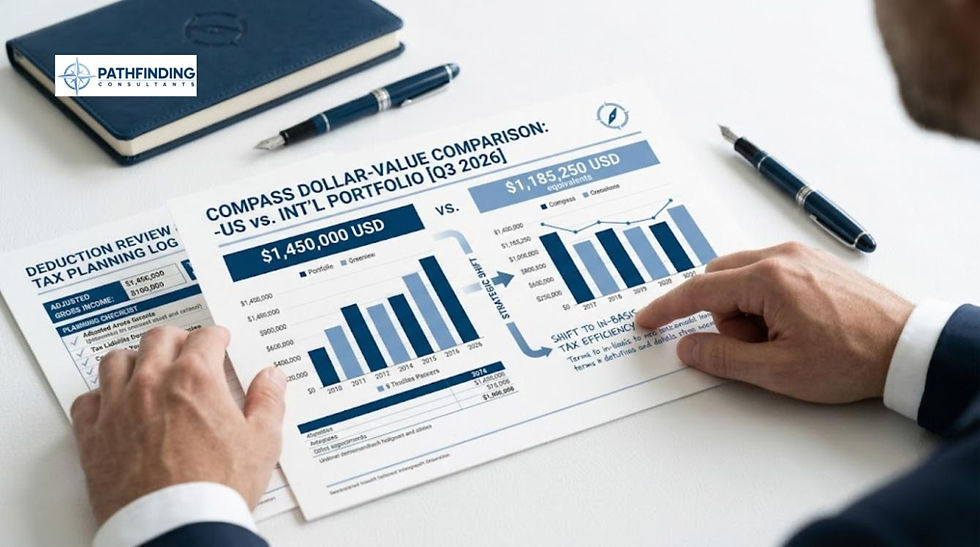
Business owners evaluating any tax planning strategy should ask which category it falls into before assuming its value. A retirement contribution or a business expense deduction reduces taxable income — valuable, but scaled by your marginal rate. A tax credit, such as the Work Opportunity Tax Credit for qualifying hires or certain small business health care credits, delivers its full stated value regardless of bracket. Neither is inherently better in isolation; the point of understanding tax credit vs deduction differences is knowing which one you are actually evaluating before deciding how much weight to give it in a tax planning conversation.
Can an S Corporation Reduce Self-Employment Tax?

This is where the credit-versus-deduction framework connects to a real planning question. Self employment tax applies to net earnings from a sole proprietorship or partnership. An S corporation changes that calculation structurally: an owner who works in the business is paid a reasonable salary as a W-2 wage, subject to standard payroll taxes, while any remaining profit can be distributed as a shareholder distribution that is not subject to self employment tax.
The key word is reasonable. Per IRS guidance, S corporation officer compensation must reflect reasonable compensation for the services actually performed — comparable to what the role would pay in the open market. An S corporation structure does not automatically reduce taxes, and understating salary to maximize the distribution portion is a well-documented audit target. Whether an S corporation genuinely helps a specific business owner depends on net profit level, the administrative cost of payroll and a separate corporate return, state-level taxes that may apply differently to an S corporation, and the reasonable compensation figure a particular role would command.
Wondering whether an S Corp election would actually benefit your specific numbers?
The answer depends on your profit, your role, and a reasonable compensation analysis.
(949) 620-1036 | pathfindingconsultants.com
A Framework, Not an Assurance of Savings

An S corporation election is not a universal answer, and no responsible tax guidance should present it as an assured savings strategy for every business. The administrative cost of running payroll, filing a separate corporate return, and maintaining a defensible reasonable compensation figure has to be weighed against the self-employment tax actually saved on the distribution portion — a calculation that only makes sense above a certain profit level, and one that changes as income, state of operation, and business structure change year to year.
Common Mistakes in This Area

Electing S corporation status before profit is high enough to justify the added administrative cost.
Setting a salary too low relative to the role, creating audit exposure on the reasonable compensation question.
Treating every deduction and credit as equally valuable without checking which category it actually falls into.
Failing to make quarterly estimated payments on the self-employment tax portion while transitioning entity structures.
These mistakes connect directly to the broader tax planning questions covered in our guide on how consultants can lower their tax liability, and to the underlying self-employment tax mechanics explained in our step-by-step calculation guide. Entity structure, deductions, and credits are not separate decisions — they are one coordinated tax picture.
When to Bring In a Tax Professional?
The reasonable compensation question alone is enough reason to involve a tax professional before electing S corporation status — setting it incorrectly creates real audit risk in either direction. Beyond that, any business owner evaluating a mix of credits, deductions, and entity structure changes benefits from a review that looks at the full picture together, rather than any one strategy in isolation.
Entity structure, deductions, and credits — reviewed together, not guessed at separately.
Schedule a consultation with Pathfinding Consultants today.
(949) 620-1036 | pathfindingconsultants.com
This article is for general educational purposes only and does not constitute tax, legal, or financial advice. Tax rules referenced are based on current IRS guidance for the 2026 tax year and are subject to change. Suitability of an S corporation election depends entirely on individual circumstances — consult a qualified tax professional before making decisions based on this information. |
Pathfinding Consultants provides business tax preparation and tax planning services for self-employed professionals, consultants, and small business owners in Orange County and beyond.


Comments