


1031 Like-Kind Exchange: Deadlines, Boot, and Form 8824 for Orange County Business Property


A business owner who sells the building their company operates from can face a combined capital gains and depreciation recapture bill large enough to consume the down payment on the replacement property. A 1031 like-kind exchange is the provision that lets that gain be deferred instead — but only if the transaction is structured correctly before the first property closes. Pathfinding Consultants provides business tax preparation Orange County business owners rely on to plan these exchanges before a sale is signed, not after.
IRS DISCLAIMER: This article is for general informational purposes only and is not tax, legal, or accounting advice. Like-kind exchange eligibility depends on the specific properties involved, transaction structure, timing, and current IRS guidance. Always consult a qualified tax professional, Enrolled Agent, CPA, or attorney before structuring an exchange or relying on this guide for a specific filing decision. Pathfinding Consultants encourages every Orange County business owner to seek personalized guidance for their own business. |
Real Property Only Under Current Law
A 1031 like-kind exchange under Internal Revenue Code Section 1031 allows an owner to defer gain when business or investment property is exchanged for property of a like kind, with no gain or loss recognized at the time of the exchange (source: IRC Section 1031; IRS Instructions for Form 8824). The critical limitation under current law is scope: beginning after December 31, 2017, section 1031 like-kind exchange treatment applies only to exchanges of real property held for use in a trade or business or for investment (source: IRS Publication 537; IRS Instructions for Form 8824).
Before that change, a 1031 like-kind exchange could also cover certain exchanges of personal or intangible property — equipment, vehicles, and similar business assets. That option is gone. A business owner attempting to structure a 1031 like-kind exchange on machinery or a fleet vehicle today is working from outdated guidance, and section 1031 also does not apply to real property held primarily for sale (source: IRC Section 1031(a)(2)).
What Counts as Like-kind Real Property
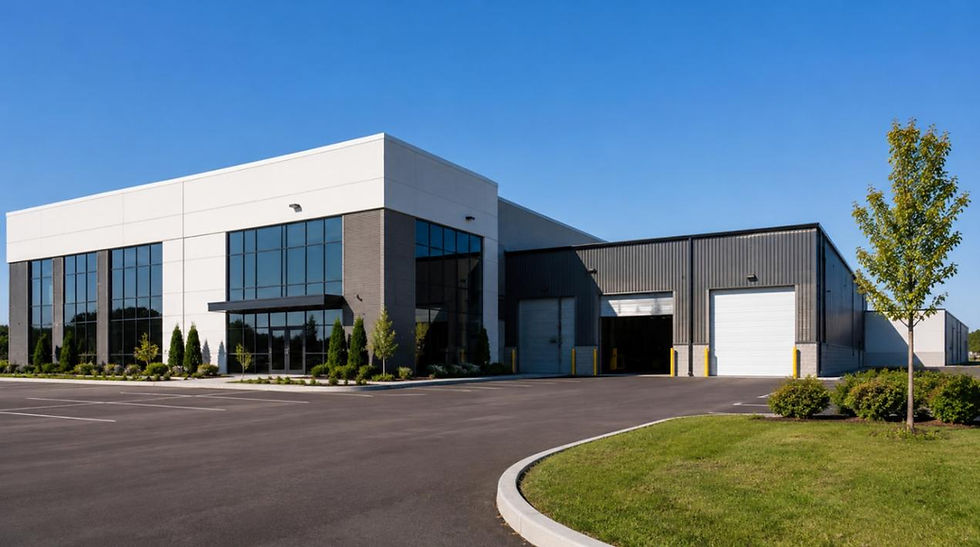
Properties qualify as like-kind if they are of the same nature or character, even if they differ in grade or quality (source: IRS Instructions for Form 8824). The like-kind property definition for real estate is genuinely broad — an office building can generally be exchanged for raw land, a warehouse for a retail center, or an apartment building for an industrial property, because all are real property held for business or investment use.
The like-kind property definition does exclude several categories outright. Section 1031 does not apply to inventory, stocks, bonds, notes, other securities, or evidence of indebtedness, and does not apply to certain exchanges involving tax-exempt use property subject to a lease (source: IRC Section 1031(a)(2); IRS Instructions for Form 8824). Both the relinquished property and the replacement property must be held for productive use in a trade or business or for investment.
The 45-day and 180-day Deadlines
The 45 day identification rule and the 180 day exchange period are the two deadlines that cause more failed exchanges than any other factor. Section 1031 requires that replacement property be identified within 45 days of transferring the relinquished property, and received within 180 days (source: IRC Section 1031(a)(3); IRS Instructions for Form 8824).
Neither deadline is extendable for ordinary business reasons. The 45 day identification rule runs from the closing date of the relinquished property, and the 180 day exchange period runs concurrently — not consecutively — meaning a business that uses all 45 days to identify has 135 days remaining, not 180. A 1031 like-kind exchange that misses either the 45 day identification rule or the 180 day exchange period generally becomes a fully taxable sale.

Planning to sell business real estate this year?
Pathfinding Consultants — Business Tax Preparation, Orange County, CA
(949) 620-1036 | pathfindingconsultants.com
Boot: When Gain Gets Recognized Anyway
A 1031 like-kind exchange does not have to be all-or-nothing. If a taxpayer receives other property or money in addition to like-kind property as part of the exchange, gain is recognized to the extent of that other property and money received — though a loss is not recognized (source: IRC Section 1031(b); IRS Instructions for Form 8824). This other property or cash is commonly called boot.
Boot in an exchange arises more often than business owners expect. Receiving cash at closing, having the buyer assume a mortgage larger than the debt on the replacement property, or acquiring a replacement property of lower value all create boot in an exchange that triggers partial gain recognition. Where the transaction results in a loss rather than gain, that loss is not recognized at the time of the exchange but is instead carried forward in the form of a higher basis on the property received (source: IRC Section 1031(c)).

Form 8824 Reporting and Related Parties
Form 8824 reporting is required for the tax year in which the relinquished property was transferred, using Parts I, II, and III of the form to report each exchange of business or investment property (source: IRS Instructions for Form 8824). Form 8824 reporting is not optional even when no gain is recognized — the deferral itself must be reported.
Related-party exchanges carry an extended Form 8824 reporting obligation. If the exchange was made with a related party, Form 8824 must also be filed for the two years following the year of the exchange (source: IRS Instructions for Form 8824). This extended filing exists because the tax code monitors whether either party disposes of the exchanged property during that window, which can retroactively trigger recognition of the deferred gain.

Why This Requires Planning Before the Sale Closes
The single most common way a 1031 like-kind exchange fails is that the seller takes actual or constructive receipt of the sale proceeds. Once the seller controls the money, the transaction is a sale, not an exchange, regardless of what the parties intended. Business consulting near me searches from Orange County business owners spike immediately after a property closes, at the exact moment when the exchange structure can no longer be created.
Pathfinding Consultants is an Enrolled Agent firm providing business tax preparation Orange County business owners have relied on to evaluate 1031 like-kind exchange eligibility, the 45 day identification rule timeline, and potential boot in an exchange before the relinquished property goes under contract. A business consulting near me conversation before listing a business property is worth substantially more than the same conversation afterward.

Common Mistakes with a 1031 Like-kind Exchange
Attempting a 1031 like-kind exchange on equipment, vehicles, or intangible property, which no longer qualifies for exchanges after 2017
Taking actual or constructive receipt of sale proceeds, which converts the transaction into a fully taxable sale
Missing the 45 day identification rule deadline, which runs from the closing of the relinquished property with no extension available
Miscalculating the 180 day exchange period as running after the identification period rather than concurrently with it
Overlooking boot in an exchange created by debt relief or a lower-value replacement property, resulting in unexpected partial gain recognition
Every one of these mistakes is avoidable when a 1031 like-kind exchange is structured before the relinquished property closes, with Form 8824 reporting requirements and the like-kind property definition confirmed in advance. A business consulting near me search before listing is how most Orange County owners find business tax preparation Orange County support in time to actually structure the exchange.
Get your like-kind exchange structured correctly before your property closes.
Pathfinding Consultants — Business Tax Preparation, Orange County, CA
(949) 620-1036 | pathfindingconsultants.com


Comments